
The Best Green Lantern Team-Ups in Comic History
Seven Green Lantern pairings that changed the book, ranked by how well they hold up, plus two that almost made it.
By Phil • Oct 22, 2026 • 11 min read
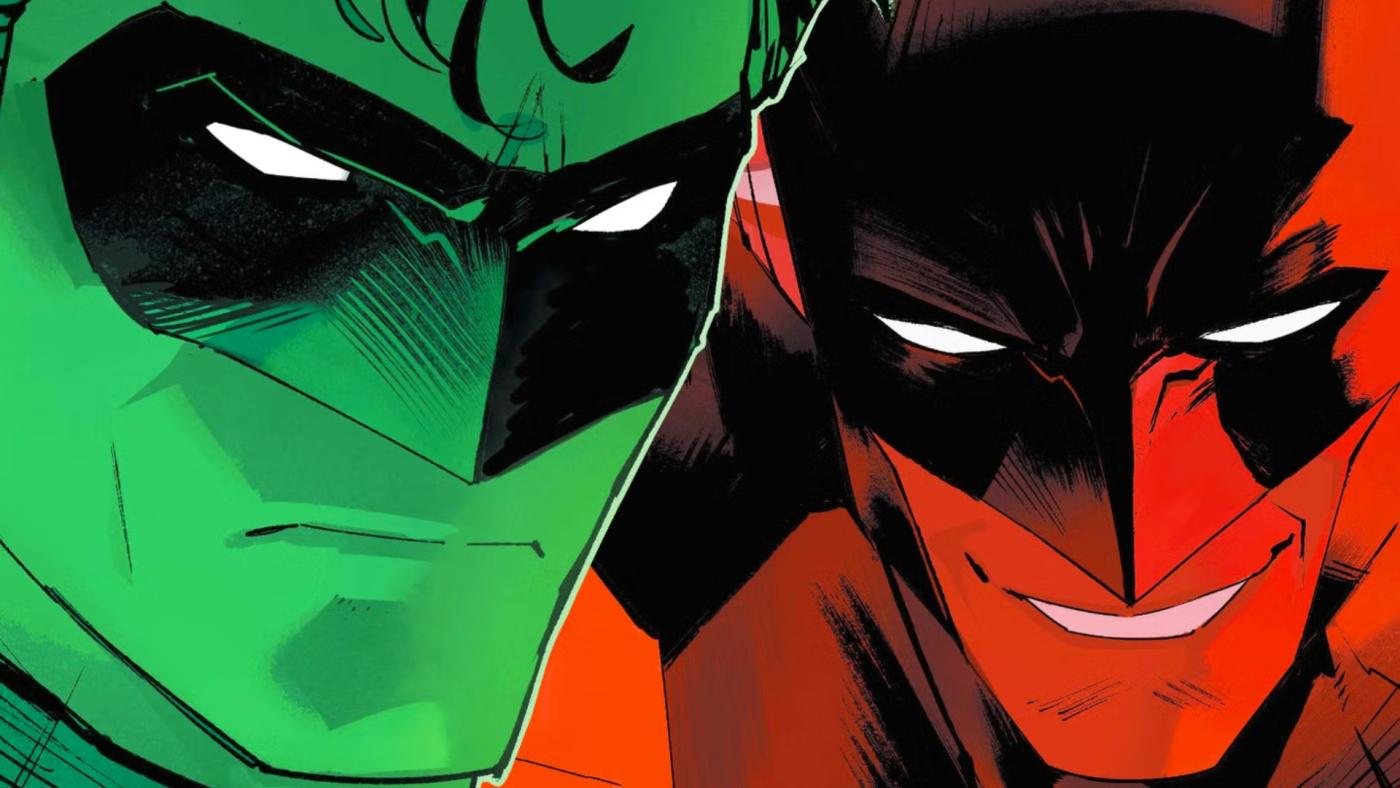
Hal Jordan is in 6 of these 9 pairings, and that tracks. For most of Green Lantern's history he's the guy everyone else gets measured against, so I'd argue the best team-ups are the ones where somebody tests him.
I ranked them on how much they changed the book and how well the stories hold up today. 7 pairings made the main list and 2 got honorable mentions. Sources and a few open questions are at the bottom.
1. Hal Jordan & Green Arrow (1970-72)
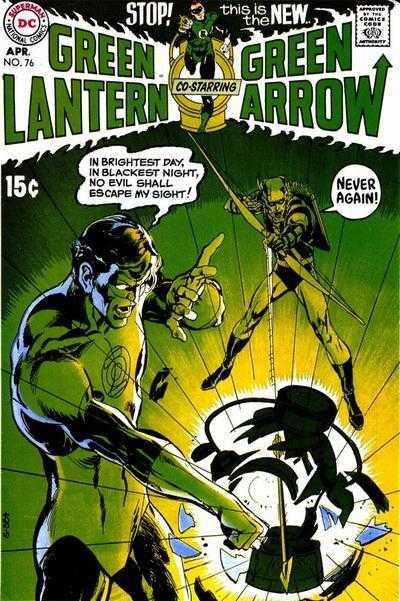
This is the run that changed what a superhero book could be about, and it's widely seen as the one that defined the Bronze Age. In 1970, editor Julius Schwartz gave Green Lantern to writer Denny O'Neil and artist Neal Adams to revive a flagging series, and added Green Arrow as a foil for Hal. The run covers Green Lantern (vol. 2) #76-87 and #89, starting with an April 1970 cover date, and the title ran as Green Lantern co-starring Green Arrow.
In #76, Ollie tells Hal the Guardians' Lanterns have ignored real problems at home, and the cover shows him smashing Hal's power battery mid-oath. From there the two cross the country in a pickup truck, with Black Canary along for parts of it. They run into racism, poverty, drugs, labor disputes, political corruption and pollution.
Hal is the loyal, well-meaning company man and Ollie is the loud left-wing conscience, and that friction drives every issue. It's also where Green Arrow became the Green Arrow we know, since the costume, the temper and the politics all come from O'Neil and Adams. John Stewart makes his first appearance in #87, right in the middle of it.
Critics loved it and sales lagged, so the book was cancelled and only came back a few years later. It's still the benchmark for this list. The standard collections, called Hard Traveling Heroes, cover #76-87 and #89.
2. Hal Jordan & Barry Allen
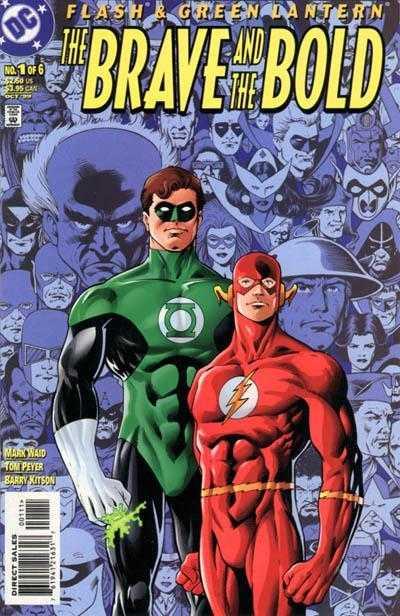
Hal and Barry are the best friendship in the DC Universe, and I'd argue the reason is how little they have in common. Hal is cocky and brash. Barry is a modest, clean-cut police scientist. They became best friends anyway.
The Silver Age built that bond over years of guest appearances in each other's books and in the Justice League, a tradition that ran into the mid-1970s. Carmine Infantino drew the Flash and Gil Kane drew Green Lantern, two very distinct stylists. I haven't tracked down issue numbers for those original team-ups yet.
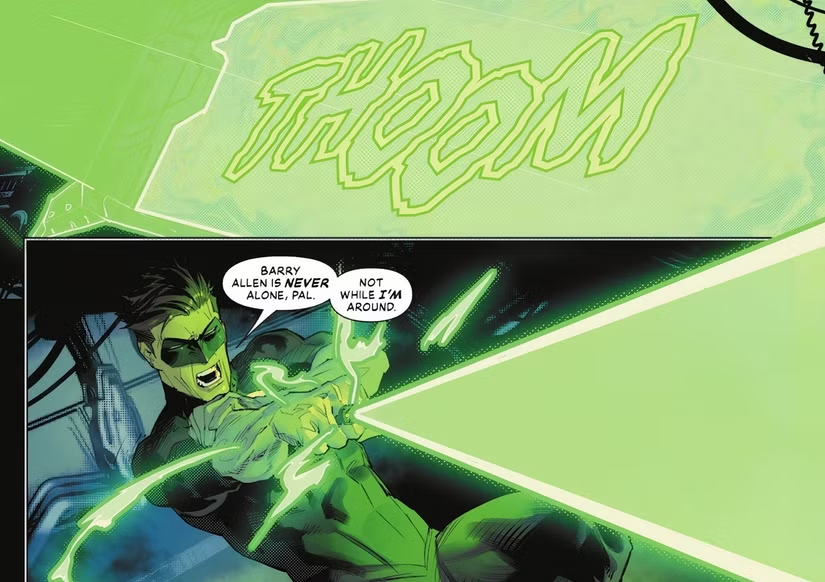
The best single showcase is Flash & Green Lantern: The Brave and the Bold (DC, 1999-2000), a 6-issue miniseries by Mark Waid and Tom Peyer with art by Barry Kitson (Tom Grindberg drew part of it too). Each issue picks a different point in their careers, from when they were new to crimefighting and to each other up to the days after the apparent death of Barry's wife in The Flash #275. Each one is written and drawn in the style of its era.
Issue #4 is set in Green Lantern's "relevancy" period, deals with political corruption, and is drawn like a Neal Adams book, which ties it right back to the top of this list. Kid Flash, the Golden Age Flash, the Golden Age Green Lantern and Green Arrow all guest star. Waid has said the friendship stuck with him as a young reader, and the series makes it the whole story. Peter Tomasi edited #1.
3. Hal Jordan & Sinestro
Hal and Sinestro have been mentor and student, bitter enemies and reluctant partners, and no other pairing on this list covers that range. Sinestro debuts in Green Lantern (vol. 2) #7.
Geoff Johns wrote the modern version. The Sinestro Corps War (2007-08, Green Lantern vol. 4 #21-25 and Sinestro Corps Special #1, which Dave Gibbons co-wrote) made them enemies, Secret Origin (2008, vol. 4 #29-35, art by Ivan Reis) went back to the mentor days, and the Blackest Night tie-ins (2009-10) put them on the same side.
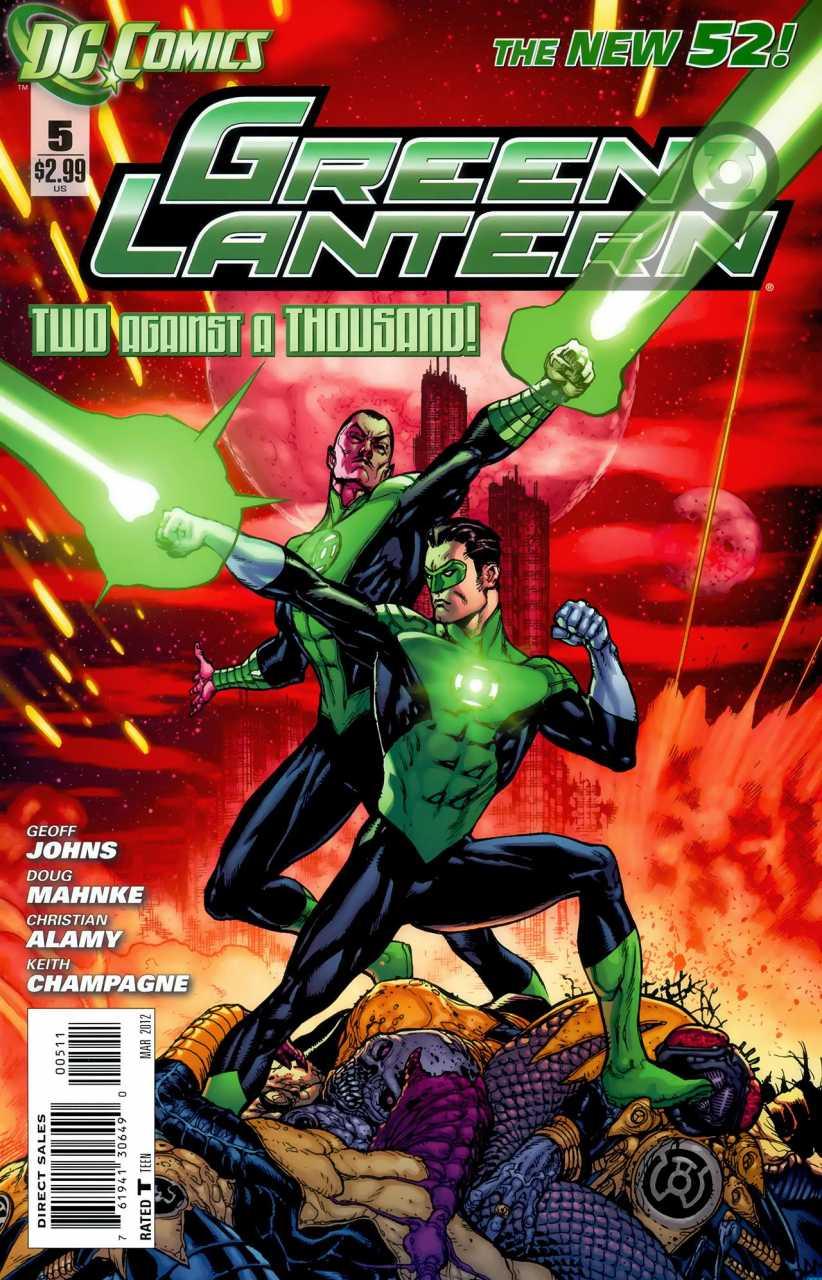
The stretch that really earns the #3 slot is the New 52 run. Green Lantern (2011) #1 strips Hal of his ring and the Guardians reinstate Sinestro as a Green Lantern. In #2 Sinestro gives Hal a new ring and heads for Korugar to free his homeworld from his own Sinestro Corps, with Hal helping reluctantly. Doug Mahnke drew the first 12 issues, and Ethan Van Sciver drew Annual #1.
From there they carry the book together against the Sinestro Corps, the Indigo Tribe and Black Hand. In Rise of the Third Army (#13-16) their rings register them as dead and pass to Simon Baz, who we'll meet at #4. Wrath of the First Lantern (#17-20) reveals what actually happened to them.
The objection is fair: most of Hal and Sinestro's best material is still antagonism, and the real partnership is a smaller slice of it. But DC's own blog called the series an unlikely buddy book at the time, and reviewers praised how naturally Johns brought the old enemies back together. That's enough to keep it at #3.
4. Jessica Cruz & Simon Baz (2016-18)
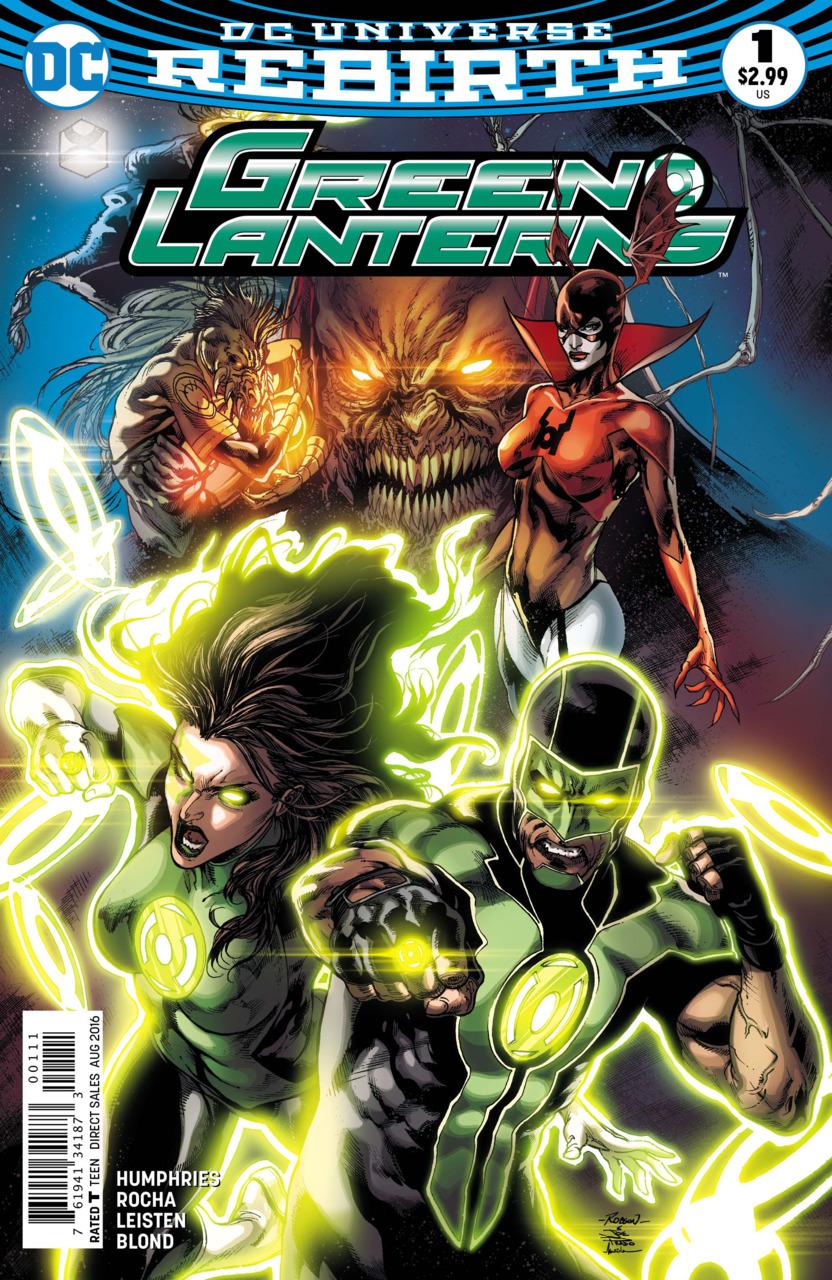
Jessica and Simon are the only Lantern pairing here with a book of their own, and that's why they're at #4. Green Lanterns ran 57 issues, from June 2016 to October 2018, after Green Lanterns: Rebirth #1 (Sam Humphries and Geoff Johns writing, Ethan Van Sciver drawing). Hal has left for a new assignment in space, so 2 rookies are left to look after Earth and the rest of Sector 2814.
The book treats them as the B team, and they don't get along at first. Jessica locked herself in her apartment for 3 years after witnessing her friends' murder. Simon got swept up in a bombing he had no part in and has dealt with the prejudice ever since.
Humphries wrote the opening run, which the collected volumes put at #1-32, and the best of it lets the partnership carry the story. #15 is a one-shot about Jessica's anxiety, #16-17 team them up with Batman, and #19-21 take on Doctor Polaris, which shows that Jessica needs Simon and that it works the other way too. Out of Time (#27-32) is Humphries's finale, and his later issues dig into the history of the Lantern rings and Volthoom.
Reviews were mixed. One early review found Jessica's anxiety arc repetitive by #5, and some reviewers saw Tim Seeley's stretch (from #33, with Dan Jurgens finishing) as a step down. I think the duo format is what makes it work anyway. Robson Rocha drew #1, with Ronan Cliquet and Eduardo Pansica among the later artists, and the whole run is collected in 9 volumes starting with Rage Planet.
5. Hal Jordan & John Stewart
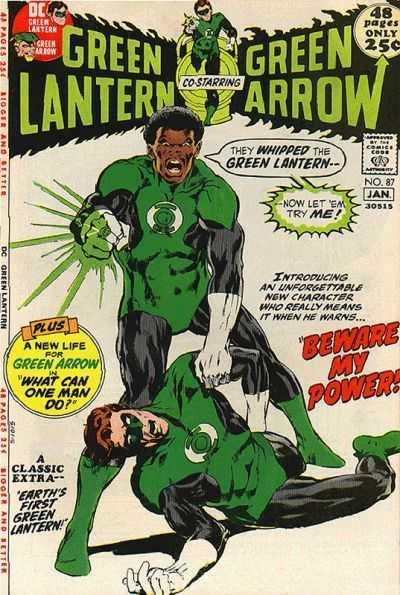
John Stewart debuts in Green Lantern (vol. 2) #87 (December 1971-January 1972), written by Denny O'Neil and drawn by Neal Adams. He's an unemployed architect and activist the Guardians pick as Hal's substitute, an outspoken radical next to a well-meaning but oblivious Hal. That contrast is the origin of the pairing.
Then the roles flip. Hal quits in #181, and John takes over as Earth's Lantern in #182 (November 1984), in "It's a Dirty Job, But...!" by Len Wein, Dave Gibbons and Mark Farmer.
Hal comes back in #198-199 in 1986. Geoff Johns later wrote them as Earth's 2 Lanterns in Green Lantern vol. 4, including the Rage of the Red Lanterns collection (#26-38).
The newest version is Green Lantern: Earth One Vol. 2 (2020, Corinna Bechko and Gabriel Hardman), where John ends up with a yellow ring and the two team up against the last surviving Guardian, the one who destroyed the original Corps.
John is the first Black Green Lantern, and thanks to the Justice League animated series he's the Lantern a lot of people picture first. One caveat: the pairing's strength is its long arc, and there's no single defining story to point to. That's why it sits at #5.
6. Hal Jordan & Alan Scott
This is the pairing that connects the Golden Age to the Silver Age. Alan Scott, the original Green Lantern, and Hal first share a page in Justice League of America #21-22 (August-September 1963), the first JLA/JSA team-up, written by Gardner Fox with Mike Sekowsky on pencils and Bernard Sachs on inks. It started an annual crossover tradition that ran until Justice League of America #244 and Infinity, Inc. #19 in 1985, billed as the last team-up before Earth-One and Earth-Two merged.
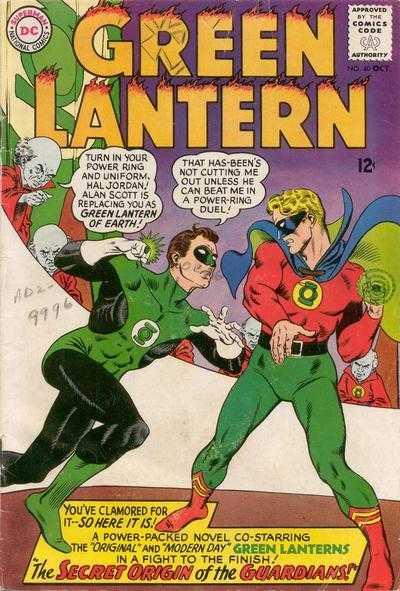
Their first solo team-up in a Green Lantern book is Green Lantern (vol. 2) #40 (October 1965), by John Broome and Gil Kane, with Sid Greene inking the interiors. Alan of Earth-Two joins Hal against Krona, the renegade scientist whose forbidden experiment is the mythological origin of the multiverse. The issue also tells the secret origin of the Guardians, and it's the first time Alan meets them.
The Flash #123 (September 1961) had already established that the original heroes lived on another Earth, and Justice League of America #21 gave the 2 worlds their names. #40 did the same job for the Lanterns. After the Earths merged in 1985 the 2 shared one universe, though Alan stayed outside Hal's Corps.
I'll admit this is a legacy and mythology pick, and it doesn't have one great story holding it up the way the entries above it do. But the Golden Age Lantern is where all of this starts, so it earns a spot.
7. Kyle Rayner & Jade
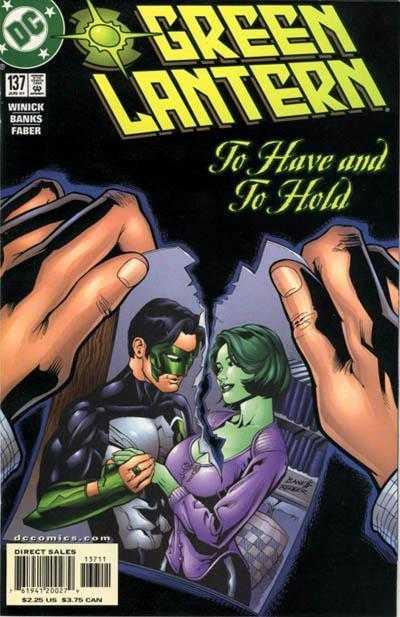
Kyle and Jade are the love story of the Kyle Rayner era, and plenty of readers still want them back together. Jade (Jennifer-Lynn Hayden) is Alan Scott's daughter, and she debuted in All-Star Squadron #25 (September 1983). Alan acts as a fatherly mentor to Kyle, which ties the pairing back to the Golden Age legacy at #6.
Ron Marz wrote the early going in Green Lantern vol. 3, with Darryl Banks, Kyle's co-creator, drawing much of the 1990s run. In Green Lantern/Sentinel: Heart of Darkness #3 (May 1998), Jade loses her powers, and Kyle gives her a spare ring so she can serve as Earth's Lantern for a while. Issue #103 (September 1998) puts her in Kyle's supporting cast, and a fan wiki cites it as where the romance starts.
Judd Winick picks it up in 2001.
In #137 (June 2001), Jade takes a spare ring again and answers Kyle's marriage proposal with "not yet." After the Terry Berg hate-crime story, Kyle leaves Earth with Jade in #154-155 (2002) to explore other worlds. It doesn't last. Marz returns for #176 (June 2004), where Kyle comes home after more than a year in space and finds she's moved on with someone else.
Jade comes back as a Black Lantern in Blackest Night (2009-10). Most recently, Green Lantern #36 (June 24, 2026, by Jeremy Adams with Ig Guara and Montos on art) brings her back as a Justice Leaguer, and the two flirt and plan a private date. One 2026 reviewer noted the relationship often felt destined for heartbreak under different creative teams, and I think that's part of the appeal. It lands at #7 because the affection for it runs deeper than its influence on the book.
Honorable mention: Guy Gardner & Kyle Rayner
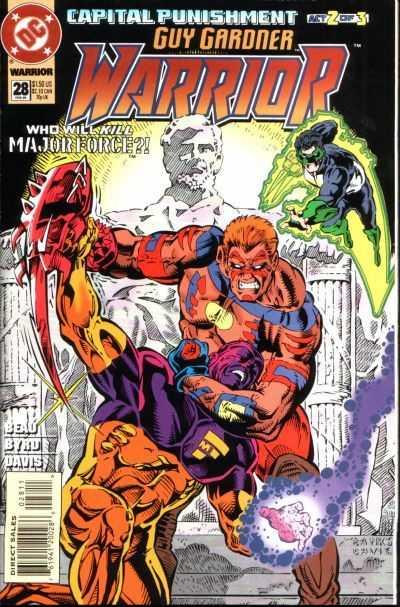
This one rests on a handful of crossovers, and I'll say that up front. The clearest is 1995's "Capital Punishment," which crosses Guy Gardner: Warrior #27-28 (cover dates January-February 1995) into Green Lantern vol. 3 #60.
In #27, Guy goes to Washington to rescue his brother and teams up with Steel. In #28 he goes berserk after learning that Major Force may be responsible for his mother's death, and Kyle steps in because he has his own grudge. Major Force murdered Kyle's girlfriend Alexandra DeWitt in a 1994 issue, and a shared enemy is what pulls the two together. Kyle turns up again in #29 (March 1995).
Beau Smith wrote Guy Gardner: Warrior, launched in 1992, with Mitch Byrd on pencils and Dan Davis on inks for #27-28. It's where Guy gets turned from a one-note jerk into a more vulnerable hero, and Ron Marz and Darryl Banks had only just handed Kyle the ring in 1994. I read the two as an odd couple, the abrasive veteran and the earnest rookie.
You can find the crossover in the Green Lantern: Kyle Rayner Rising Compendium (2023), which collects Warrior #27-28 alongside Green Lantern #48-65.
Honorable mention: Hal Jordan & Kyle Rayner
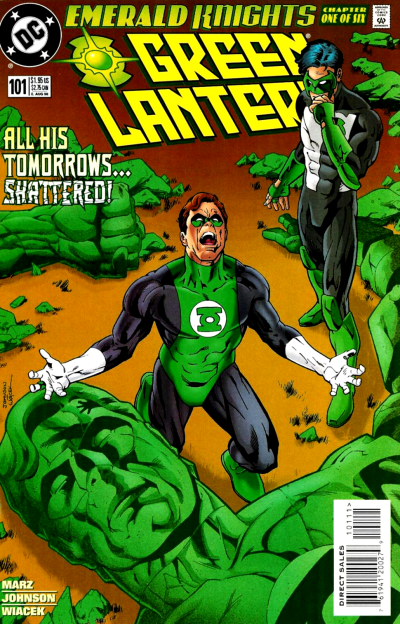
Hal and Kyle's best team-up is Emerald Knights (1998). In Green Lantern vol. 3 #101-106 (June-October 1998, plus Green Arrow vol. 2 #136), Kyle gets thrown back through time and lands in the middle of a fight between a pre-Parallax Hal and Sinestro.
Ron Marz wrote it, Kevin Dooley edited, and Jeff Johnson and Paul Pelletier did the pencils.
The 2 get sent back to Kyle's present together, and the younger Hal has to take in that he'll become one of the most reviled villains in the DC Universe and that his friend Ollie is dead. Kyle is awed to be teamed with the greatest Green Lantern and feels some self-pity about being pushed out of the spotlight. It ends with Hal telling Kyle he's proud to see him carry on the tradition, and leaving him a copy of his ring.
Green Lantern: Rebirth (October 2004-May 2005, 6 issues) picks up the thread. Geoff Johns wrote it and Ethan Van Sciver drew it, with Prentis Rollins among the inkers. Hal returns, Kyle stays on as one of the Corps' Lanterns, and the two have their first true meeting with Hal back as himself.
Fans have been split on the two, and a Wizard poll from the Kyle era had Kyle narrowly ahead of Hal, 51 to 49. Most of their other history is legacy tension, so this stays an honorable mention.
Keep reading
Articles
Green Lantern January 2027 Solicitations: Is the Corps Worth Rebuilding?
Hal has turned the Corps upside down, Black Hand is in Corps #24, and a 1981 Green Lantern comic gets a facsimile. These are the 5 Green Lantern books DC has solicited for January 2027.
By Phil • 9 min read
Articles
Watters and Hotz Take Hal Jordan to War in Green Lantern: Doomed Cosmos
DC has announced Green Lantern: Doomed Cosmos, a six-issue Elseworlds miniseries from Dan Watters and Kyle Hotz where the Corps is the universe's last defense against humanity. Issue #1 arrives January 20, 2027.
By Phil • 3 min read
Articles
The 10 Best Non-Human Green Lanterns
From a squirrel who got off death row to a planet that doesn't socialize, these are the 10 best Green Lanterns who aren't human.
By Phil • 5 min read